Best Time to Visit the Morocco Desert: A Month-by-Month Guide From a Local Berber Guide
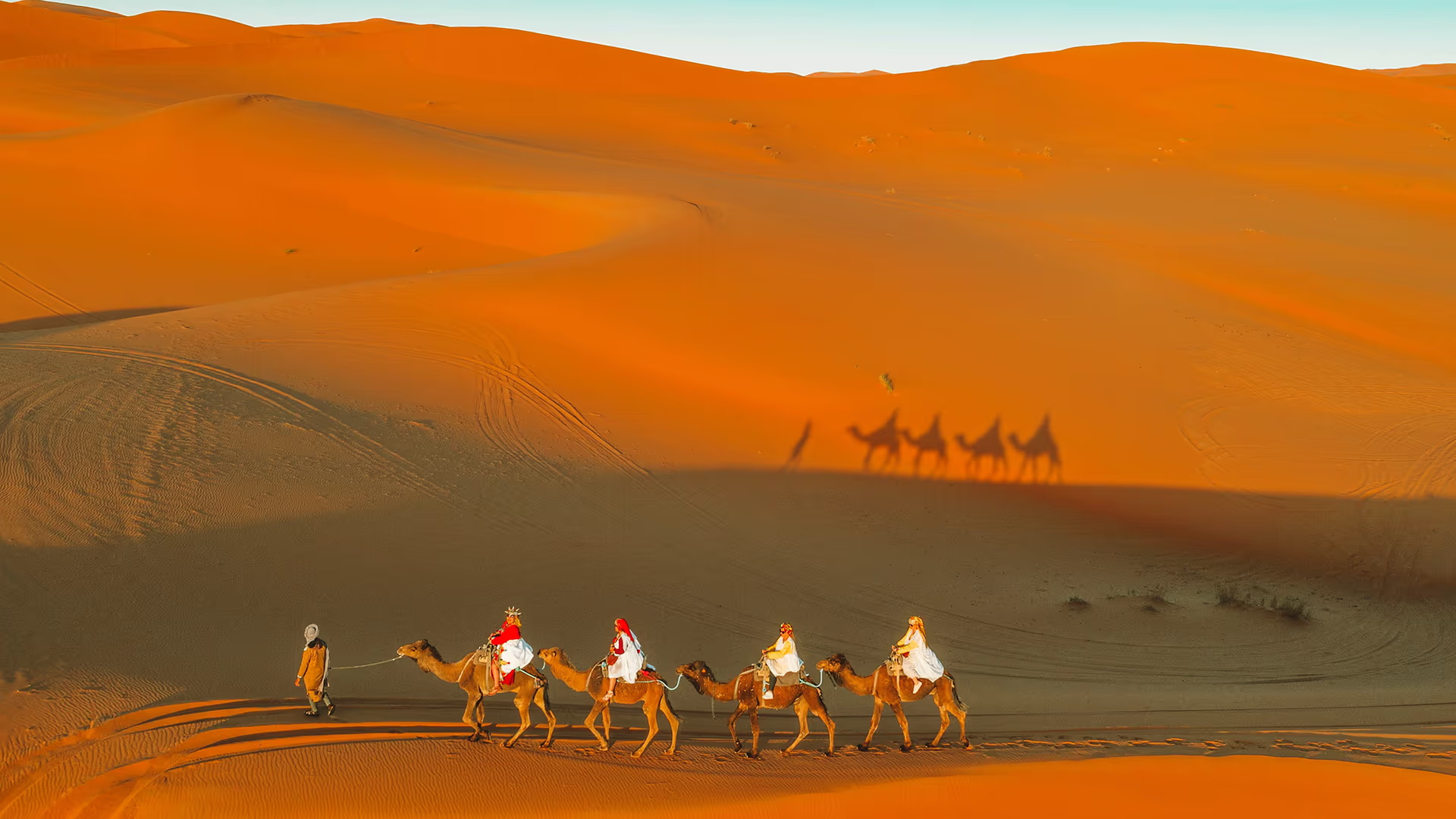
The best time to visit Morocco desert is March, April, October, and November. Daytime highs sit at 22–28°C and desert nights stay cool but not cold. Avoid June through August when temperatures climb above 40°C, and avoid overnight camp stays in December and January when nights can drop to 4°C.
That’s the short answer. The long answer is what no other Morocco travel blog will tell you, because most are written from London or Lisbon — not Erfoud, where I was born, 30 km from the Erg Chebbi dunes. I’ve guided over 400 Sahara crossings since 2014. Here is what I tell my own family when they ask when to come.
Best Time to Visit Morocco Desert
Quick Reference — Morocco Desert Weather by Month
| Month | Day high | Night low | Rating | Why |
|---|---|---|---|---|
| Jan | 17°C | 2°C | ⭐⭐ | Cold camp nights, beautiful clear skies |
| Feb | 19°C | 4°C | ⭐⭐⭐ | Warming up, occasional sandstorm |
| Mar | 24°C | 9°C | ⭐⭐⭐⭐⭐ | Best month — start of season |
| Apr | 28°C | 13°C | ⭐⭐⭐⭐⭐ | Peak — book 2 months ahead |
| May | 33°C | 17°C | ⭐⭐⭐⭐ | Getting hot, fewer crowds |
| Jun | 38°C | 22°C | ⭐⭐ | Too hot midday — locals don’t go |
| Jul | 41°C | 25°C | ⭐ | Avoid |
| Aug | 41°C | 25°C | ⭐ | Avoid |
| Sep | 35°C | 19°C | ⭐⭐⭐⭐ | Cooling down, good month |
| Oct | 29°C | 14°C | ⭐⭐⭐⭐⭐ | Tied with April for best |
| Nov | 24°C | 9°C | ⭐⭐⭐⭐⭐ | Last great month before cold |
| Dec | 19°C | 4°C | ⭐⭐ | Day OK, camp night cold |
Source: Direction de la Météorologie Nationale du Maroc — Erfoud weather station, 30-year average. Erfoud sits 30 km from Erg Chebbi.
Best Months in Detail
March – Quietest of the High Season
March is the month I send my fussiest travelers. Days are warm enough for a t-shirt by 11 AM. Nights at the camp need a fleece, not a parka. You’ll see almond trees in pink bloom across the Dades Valley as you drive south. The Sahara still has wildflowers in the northern dune corridors — small, low, and easy to miss if you’re not looking.
Crowds: Low. Riads in Marrakech run 60–70% occupancy. Pricing: Standard. No premium yet. Watch out for: Mid-March sandstorms — about 1 day in 10. Chergui (the hot east wind) lifts sand and reduces visibility for 6–24 hours. We adjust the camel trek time on those days.
April – The Most Booked Month
If you ask 10 Morocco operators which month sells out first, all 10 will say April. Climate is perfect — 28°C day, 13°C night. The dunes are golden in long afternoon light. Spring colors linger in the kasbah valleys.
Crowds: High. Riads in Marrakech medina near 100% from April 5 onward. Pricing: Peak — expect 15–20% above standard rates. Book by: End of January for first-pick of camps and riads.
October – April’s Twin
October is April backwards. The same temperatures, the same long golden light, the same wildflower smell after the rare autumn rain. The difference: in October you also get the date harvest in the Tafilalet Valley. Trucks loaded with dates drive past you on the road south. You can stop at Erfoud’s date market and try varieties you’ve never seen — Mejhoul, Bousthami, Bouittob, Aziza.
Crowds: High but not as packed as April. Pricing: Peak. Book by: End of July.
November – The Last Great Month
By mid-November you start to feel winter coming in the morning. Day temperatures stay perfect (24°C). Night temperatures drop fast — by 7 PM you’ll want a jacket. The Berber camp staff start lighting the fire pits earlier.
Crowds: Medium. Easy to find rooms. Pricing: Standard, occasional discount. Best for: Travelers who want to skip the spring crowds.
Months to Avoid (and What to Do Instead)
June, July, August — Too Hot
Locals don’t go to the Sahara in summer. That should tell you something. Daytime temperatures in Erfoud and Merzouga regularly hit 41–43°C in July. The 4×4 has A/C — the dunes don’t. The camel trek at 5 PM still cooks you because the sand radiates heat for hours after sunset.
Better summer alternative: A Morocco coast tour. Essaouira, Sidi Ifni, Mirleft — Atlantic breeze, 22–28°C all summer, surfing, fish lunches. We can build a 7-day Marrakech-to-Atlantic route that skips the desert entirely.
December and January — Cold Camp Nights
Daytime in December is fine — 19°C, sunny, beautiful. The problem is the camp. Overnight lows in Erg Chebbi drop to 4°C. The luxury camps have heated en-suite bathrooms but the tent itself is canvas — once the campfire dies down at 11 PM, it gets cold fast.
If you go anyway: Bring a serious sleeping fleece, thermal underlayers, and book a luxury camp with heated bedding (we know which ones). Or do the desert as a day trip — drive in by 4×4, watch sunset, drive back to a hotel in Merzouga town. Skip the overnight.
Other Factors to Consider
Sandstorm Season (Mid-February to Early April)
The chergui — the hot east wind off the Sahara — kicks up dust and sand from mid-February through early April. Sandstorms in this region last 6 to 36 hours. They’re rare (about 5–8 days in those 6 weeks) but they do happen.
What this means for your trip:
- Wear sunglasses and a scarf at all times outside
- Don’t wear contact lenses on dune days
- Camera lens cap on whenever not shooting
- Camel treks may be rescheduled by 2–3 hours
- Sleeping in the tent is fine — sand doesn’t get in
We monitor the weather 48 hours out and adjust your schedule. Tour cancellation due to weather is extremely rare in our 11 years.
Ramadan — Going Anyway
Morocco is a Muslim country. During Ramadan (varies year to year — check the Islamic calendar), most local people fast from sunrise to sunset. Tourist services run normally. Some restaurants in smaller towns close during the day. Hotel restaurants stay open.
Should you avoid Ramadan? No. Travel in Ramadan is actually beautiful — the Iftar (sunset meal) at the camp is more festive, the hospitality is heightened, and the country slows down in a way that’s unique. We’ve run hundreds of Ramadan tours.
Practical: Bring snacks for the 4×4. Don’t eat or drink in public places before sunset out of respect.
Religious and National Holidays
| Holiday | When | Impact |
|---|---|---|
| Eid al-Fitr | After Ramadan | Banks closed 2 days, riads sold out |
| Throne Day | July 30 | Banks closed, festive atmosphere |
| Eid al-Adha | Variable | Banks closed 2 days, lamb prices rise |
| Independence Day | November 18 | Banks closed, parades |
We adjust pickup times and route stops around these dates. Just tell us when you’re traveling and we’ll handle it.
Best Time by Traveler Type
| You are… | Best months | Why |
|---|---|---|
| First-time Morocco visitor | April or October | Peak weather, all camps open, easy to book photo ops |
| Photographer | March or November | Long shadows, golden hour 30 min longer, dramatic skies |
| Family with kids | September or May | Shoulder season — easier to find adjacent rooms |
| Honeymoon | April or October | Climate + every luxury camp running |
| Solo female traveler | March, October, November | Quiet routes, plenty of riads with female staff |
| Budget traveler | Late November or early March | 25% lower riad rates than peak |
| Repeat visitor | February or June (early) | Quiet, weird, beautiful in different ways |
Booking Lead Times
Based on our actual booking data from 2024–2025:
- April departures: Book 8–10 weeks ahead for first-pick camps
- October departures: Book 6–8 weeks ahead
- March, May, September, November: Book 4–6 weeks ahead
- June, July, August, December, January, February: Book 2–4 weeks ahead
Last-minute bookings (under 7 days) are possible — we run them about twice a month — but you’ll get whatever camp and riad has space, not necessarily our preferred partners.
My Personal Recommendation
If you can pick any week of the year, pick the first or second week of October. Here’s why:
- The summer crowds have left
- Date harvest is in full swing in the Tafilalet
- Nights are still warm enough for the camp dinner outside
- Aït Benhaddou has the best afternoon light of the year
- Atlas mountain villages still have running streams from summer melt
- Riad prices haven’t jumped to peak yet
- Wedding season (mid-October to mid-November) means traditional Berber music in mountain villages — you might catch a celebration
The second-best window: last 10 days of March. Same logic, mirrored.
Ready to Plan Your Sahara Trip?
If you’ve decided on your month, the next step is picking your route. Most travelers come to us with a month in mind and let us suggest the right Morocco desert tour length and starting city based on the weather window. April travelers often combine Marrakech with the desert; October travelers tend to add Chefchaouen for autumn color.
Get a custom Sahara itinerary in 24 hours → Contact us with your dates, group size, and travel style. No credit card. Free cancellation 30 days before departure.
FAQ
What is the best month to visit the Morocco desert?
April and October are the two best months. Daytime highs sit at 28-29°C, nights are cool but not cold (13-14°C), and the Sahara dunes have golden afternoon light. Book April departures 8-10 weeks ahead; October 6-8 weeks ahead.
Is it too hot in the Morocco desert in summer?
Yes. June, July and August see daytime temperatures of 38-41°C in Erfoud and Merzouga. Locals avoid the Sahara in summer. If you must travel during these months, consider a Morocco Atlantic coast tour instead — Essaouira and Mirleft stay 22-28°C.
How cold does the Sahara get at night?
Sahara overnight lows depend on the month. April-October nights stay 13-25°C. November and March drop to 9-13°C. December-January overnight lows hit 2-4°C — bring a serious fleece, thermal layers, and book a heated luxury camp tent if going in winter.
Are there sandstorms in the Morocco desert?
Sandstorms are possible from mid-February to early April when the chergui (east wind) blows. They occur 5-8 days during this 6-week window and last 6-36 hours. We monitor weather 48 hours out and adjust your camel trek and route accordingly.
Can I visit the Morocco desert during Ramadan?
Yes. Tourist services operate normally during Ramadan. Hotels and tour operators don’t fast — service stays the same. Some local restaurants close during the day. Iftar (sunset meal) at the desert camp during Ramadan is especially festive and worth experiencing.